
How To Use Perspective To Benefit You?
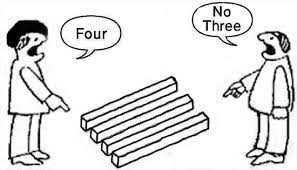
Perspective is a tricky thing. If we only look at something from one perspective, we miss opportunities to problem solve and maintain or develop positive relationships with those around us. This is so true whether we are at work or play.
So I’ve developed the ‘Managing SUDS’ model, which includes the lines of managing self, managing up, managing down and managing sideways. Picture you as the savvy problem solver and perceptive relationship manager. To be this person, you need to assess a situation from various perspectives and decide if managing up, down or sideways is best for that circumstance.
You might be making life tougher for yourself if you don’t try this; consider this scenario.
Greg is a front line supervisor with five members in his team. His manager Cath has supported his extensive professional development. Greg got excellent feedback from his team about his performance as their leader. He decided he would manage them through his perspective of ‘managing down’. Greg supported just-in-time learning, gave constructive feedback where mistakes occurred, and encouraged time for reflection. He took a planned approach to do things differently when team members recognised opportunities for improvement. He ensured that birthdays and work anniversaries were recognised and introduced a team member of the month award. Greg did brilliantly at managing down – his way.
Greg and Cath had a solid, collegial relationship. It worked well for them both for Greg to manage this relationship from the ‘sideways’ perspective. Then Greg’s manager, Cath, left and was replaced by someone with a completely different management style. Allen, the new manager, emphasised deadlines, appeared not to trust Greg’s way of working, had unusual explanations about external impacts on performance and said he didn’t believe in soft skills, just outcomes. He only wanted to see Greg for thirty minutes every fortnight. Because Greg found the conversations uncomfortable, he didn’t suggest a more suitable catch-up routine. He forgot that he could shift his perspective and move into managing up mode; he started to see his efforts as pointless.
Before Allan became his boss, he could see opportunities for innovation with the other team leaders, but now he withdrew and didn’t participate fully in meetings. His relationships with his peers began to decline. They saw him as isolated and reluctant to engage in conversations. As a result, he lost any perspective around the value of managing sideways.
He compared himself with other team leaders and saw himself as lacking and the others as successful. The team could see the difference in Greg and how the changes were impacting them. He worked long hours doing low-level busy work. Keeping busy was his way of convincing himself that he was doing a good job. But now he hates going to work. He’s lost his motivation. He doesn’t know how to change what’s happening to him, and he doesn’t understand why it’s happening to him. He has forgotten to manage himself.
Greg is no longer the savvy problem solver and the perceptive relationship manager. But all is not lost; sometimes, taking time to consider how to manage a problem or a relationship from a different perspective can provide the answer. If you’d like to receive more information, email Gail at gail@everywhensolutions.com.au or read Chapter 9 of Conscious Grit, available at a range of online booksellers.
